Guide reviewed against the sources below on July 15, 2026.
How to identify earrings from a photo
Photograph both earrings together, then turn one over. The fastening is often the fastest clue: post and butterfly, screw-back, leverback, fishhook, clip-on, hinged hoop, or omega back. Next compare the pair for matching stones, mirrored design, replacement parts, and marks on the back or fastening.
Common earring types
Compare the overall form first, then use the construction details to narrow the style.
- Stud earrings
- The decorative element sits close to the ear and usually attaches with a straight post and push, screw, or locking back.
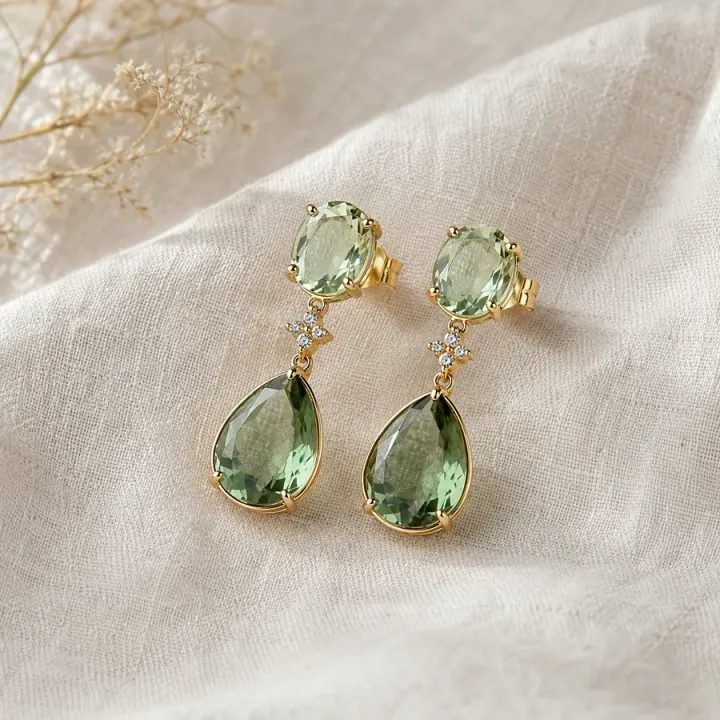
- Drop or dangle earrings
- One or more elements hang below the ear from a post, hook, leverback, or decorative top section.
- Hoop or huggie earrings
- A curved body passes through or sits around the ear, closing with a hinge, latch, post, or continuous wire.
- Clip-on earrings
- A spring, screw, paddle, or hinged clip grips the earlobe without requiring a piercing.
- Cluster or statement earrings
- Multiple stones, beads, panels, or sculptural elements create a larger front-facing composition.
How to examine a pair step by step
- Identify the fastening. The back can reveal whether the earring is a stud, hook, leverback, hoop, screw-back, clip-on, or converted design.
- Compare the pair. Look for matching stone colour and size, mirrored orientation, equal length, original backs, and the same construction on both earrings.
- Describe the front design. Record the stone arrangement, setting type, motifs, enamel, texture, engraving, filigree, beadwork, and movement between sections.
- Inspect every back surface. Maker and fineness marks may appear on posts, clips, hooks, leverbacks, hinge bars, screw fittings, or the reverse of the decorative body.
Marks and details worth photographing
- Posts, butterflies, screw-backs, clips, hooks, and leverback fittings
- Reverse of each decorative element and the edge of hinged hoops
- Maker cartouches, patent marks, model numbers, and fineness stamps
- Replaced backs, bent posts, solder repairs, missing stones, and worn plating
What affects earring value
A useful estimate starts with the details a buyer would compare. Record these alongside the GemPeek result so you can narrow your searches and compare genuinely similar pieces.
- A complete matching pair with original fittings and consistent stones
- Metal content, stone or pearl identity, matching quality, and setting construction
- Designer or maker, age, provenance, rarity of the design, and original box
- Condition of posts, clips, hinges, solder joints, enamel, stones, and surface finish
Photo checklist for a stronger earring identification
- Show both earrings side by side in the first photo to establish that they are a pair.
- Turn one earring over and photograph the complete fastening and reverse construction.
- Take a side profile if stones sit high, elements articulate, or the setting has depth.
- Keep tiny marks sharp by filling the frame and tapping directly on the stamp to focus.
Continue your jewelry research
Use the jewelry value estimator guide to understand the factors behind a price range, or follow the jewelry photo checklist before your next scan.