You inherit a ring, hold it to the light, and the diamond looks wrong somehow: chunkier than modern stones, squarish instead of round, with a dark spot dead center when you look straight down. Before anyone tells you it is a poorly cut diamond, consider the opposite. You may be holding an old mine cut diamond, a hand-cut antique with a following of its own among antique-jewelry buyers.
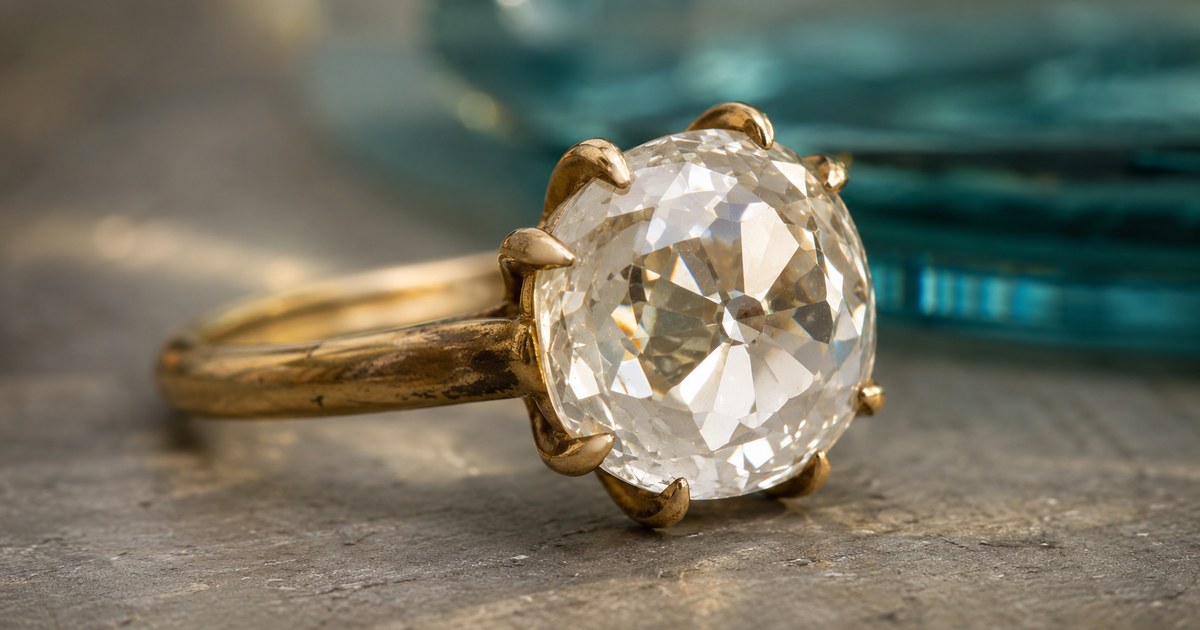
An old mine cut diamond is an antique cut with a squarish, cushion-like outline, a high crown, a small table, and a large culet visible as a dark circle through the top. Cut by hand from roughly the 18th through the late 19th century, spanning the Georgian and Victorian eras, these diamonds were shaped to glow in candlelight rather than sparkle under electric light.
What an old mine cut diamond looks like: the four tells
You can spot most old mine cuts with your eyes, a loupe, or a zoomed-in phone photo. Look for these signatures together:
- A squarish, cushion-like outline. Modern round brilliants are machine-round. Old mine cuts follow the natural shape of antique diamond rough, so the girdle outline reads as a soft square or cushion, often slightly asymmetric. No two are quite alike, which is part of the charm.
- A high crown. The top portion of the stone rises steeply above the setting. Viewed from the side, an old mine cut looks tall and domed compared with the flatter profile of a modern stone.
- A small table. The flat facet on top is noticeably smaller relative to the stone than on modern cuts, which pushes more of the light performance into broad flashes rather than fine sparkle.
- A large, visible culet. Cutters of the era left a sizable flat facet at the pointed bottom of the stone. Looking straight down through the table, that culet shows as a small dark circle in the center. New owners often mistake it for a hole or a flaw. It is neither; it is the single most recognizable fingerprint of an antique cut.
Facet edges may also look slightly uneven under magnification, and the stone may sit deep in its mount. All of that is consistent with hand cutting, not damage.
Old mine cut vs old European cut vs modern round brilliant
Three cuts get confused constantly, and telling them apart matters for both dating and value:
- Old mine cut (roughly 18th to late 19th century): squarish cushion outline, high crown, small table, large culet. The earliest of the three.
- Old European cut (later era, dominant around the turn of the 20th century): the transitional step toward the modern round. The outline becomes genuinely round, but the high crown, smaller table, and visible culet remain. If your stone is round but still shows a dark culet circle, old European is the likely answer.
- Modern round brilliant (20th century onward): precisely round, lower crown, larger table, and a culet cut to a point or nearly so, meaning no dark circle. Engineered for maximum sparkle under electric light.
The quick sorting question is outline first, culet second. Squarish outline with a culet: old mine. Round outline with a culet: old European. Round outline, no culet: modern brilliant. The GIA’s 4Cs framework grades modern cut quality against round brilliant proportions, which is exactly why antique cuts score oddly by modern standards; they were built for a different century and different light.
Why old mine cuts look the way they do
Every old mine cut was shaped by hand, by eye, with the tools of its era, centuries before standardized proportions existed. Cutters worked to preserve weight from the rough and to flatter the stone in the lighting people actually lived with: candles and oil lamps. The high crown and small table produce broad, slow flashes of light and shadow that flicker beautifully in flame light, a look collectors describe as warmth or fire that modern stones do not replicate. The apparent imperfections are the point: they are evidence of a human hand and an honest signature of age that machine cutting cannot fake.
That age evidence also helps authenticate the whole piece. An old mine cut in a period-appropriate mount supports the ring’s story; the same stone in a brand-new setting raises questions worth asking. Our ring identification guide covers how settings, shanks, and marks help date the mount around the stone.
Why antique cuts are getting more attention
Two things changed underneath the antique market, and neither of them is hype.
The first is supply. Nobody cuts old mine stones anymore. Every one that exists was finished by hand before electric-powered bruting standardized the round outline, so the pool is fixed and only shrinks as stones get recut or lost. Finite supply is the oldest reason a category holds interest.
The second is contrast. Machine-cut round brilliants are now produced in volume, laboratory-grown stones included, so a technically perfect sparkle is the easy thing to buy. That makes the opposite qualities, asymmetry, a visible culet, chunky flashes instead of fine glitter, the scarce ones. Buyers who want a stone that does not look like every other stone have a short list, and antique cuts are on it.
Neither point is a promise that your ring is valuable. It is the reason a hand-cut stone deserves identification before anyone modernizes it, and the reason the recutting question below matters.
Do not recut an antique diamond
At some point someone, possibly a jeweler, may offer to “improve” the stone by recutting it to modern round brilliant proportions. Decline, or at least pause until you understand the trade. Recutting an old mine cut:
- Loses carat weight, permanently. Reshaping a squarish, high-crowned stone into a round brilliant means grinding away diamond. The stone that comes back is measurably smaller.
- Can lose collector and antique value. The antique market values the hand-cut character itself, so a recut stone becomes just another modern diamond of modest size, minus whatever premium and provenance the original cut carried.
There are edge cases where recutting a badly damaged stone makes sense, but that is a decision to make with a qualified appraiser after you know what you have, not a default. If real money is involved, an independent appraisal is worth the fee; our guide to how much a jewelry appraisal costs explains fee models and how to choose the right appraisal type.
First steps if you think you have one
Start by confirming the stone is a diamond at all, since antique mounts also hold paste, white sapphire, and other period substitutes; the checks in how to tell if a diamond is real apply to antique stones too. Photograph the piece from the top, the side, and through the table so the outline, crown height, and culet are all visible. A scan with GemPeek reads those cues and suggests the likely cut, era, and an estimated value range as a first answer; for a stone with real collector potential, confirm with a professional appraiser before selling. To understand which factors beyond the cut move the price, see what makes jewelry worth more.
The short version: that odd, chunky, dark-centered diamond may be the most interesting thing in the jewelry box. Identify it before anyone polishes, remounts, or recuts the history out of it.