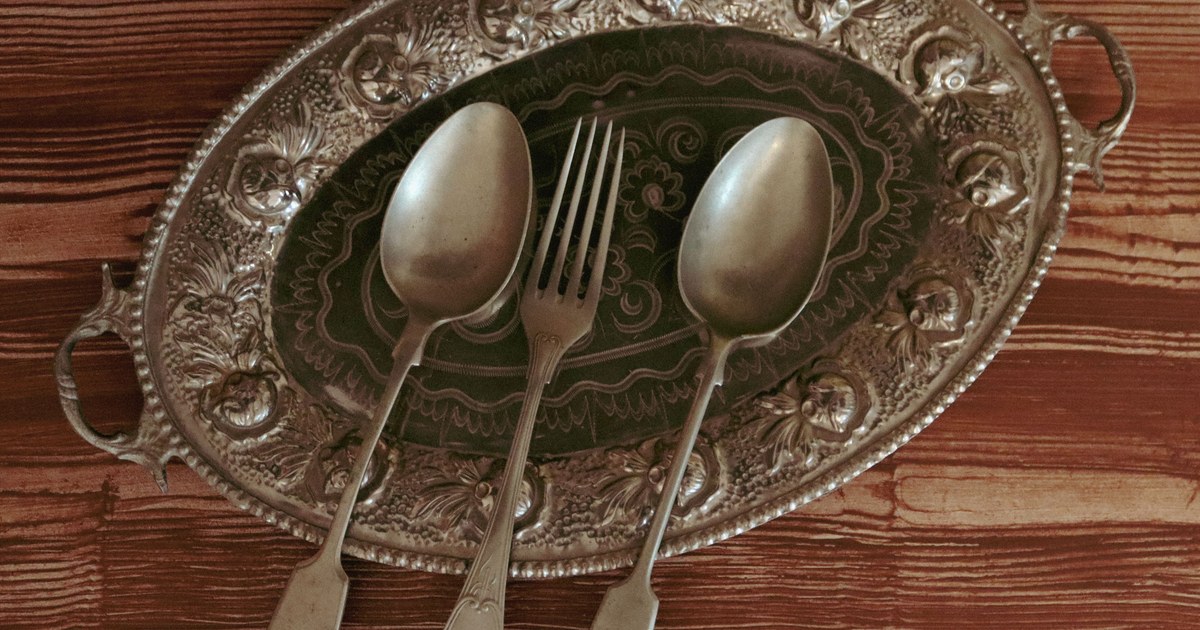
What does EPNS mean? It stands for electroplated nickel silver, and it is one of the most misunderstood marks on old silverware and jewelry. The word “silver” appears twice in the phrase, which is why so many people assume an EPNS piece is solid silver. It is not.
EPNS means a base-metal object, made of an alloy called nickel silver, was coated with a thin layer of real silver by electroplating. Nickel silver itself contains no silver at all; it is usually about 60% copper, 20% nickel, and 20% zinc. So an EPNS piece has almost no melt value, and anything it is worth comes from its design, maker, and condition.
The good news is that the mark is honest. EPNS tells you exactly what a piece is, which saves you from paying a sterling price for plate.
What EPNS stands for, word by word
- EP, electroplated: silver was deposited onto the surface using an electric current.
- NS, nickel silver: the metal underneath. Despite the name, it is a copper alloy with nickel and zinc, also called German silver or alpaca. Its name comes from its silvery color, not its content.
The combination took off in the mid-1800s. The modern electroplating process for this kind of ware was patented in 1840 by George Richards Elkington and Henry Elkington in Birmingham, and nickel silver became the standard base for silver-plated cutlery and tableware afterward. Before electroplating, the main way to make silver-look goods cheaply was Sheffield plate, in which thin sheets of silver were fused onto a base metal core.
Related marks you will see next to EPNS
EPNS is one of a family of plating marks. The others follow the same logic:
- EP: electroplated, base metal not specified.
- EPBM: electroplated Britannia metal, a pewter-like tin alloy base.
- EPWM: electroplated white metal.
- EPGS: electroplated German silver, which is simply another name for nickel silver.
- A1 or AA: a plater’s quality grade meaning a heavier deposit of silver, not a silver content.
- Silver plate, SP, or silverplate: plated, base metal unspecified.
None of these are fineness marks. They tell you the object is plated, and that is all. The FTC’s consumer guidance draws the same line in US terms: “silver,” “sterling,” and “sterling silver” describe products containing 92.5% pure silver, while “silver plate” means a layer of silver applied to a base metal.
How to tell EPNS from sterling silver
If a piece carries a mark, the mark usually settles it. Here is what solid silver looks like instead:
- 925 or STERLING: sterling silver, 92.5% silver. The meaning and the common variations are covered in what does 925 mean on jewelry.
- 800: 80% silver, a standard the UK Assay Office lists among common silver standards.
- The lion passant: on British silver, a walking lion with one paw raised. The UK Assay Office describes it as the most recognizable British silver hallmark, used for centuries to show the sterling standard. Edinburgh uses a lion rampant for the same standard.
A British piece with EPNS and no lion is plate. A British piece with a lion, an assay office mark, a maker’s mark, and often a date letter is hallmarked silver.
When a piece has no mark at all, or the mark is worn, look for wear. Plating wears first on high points and edges: the tips of spoon bowls, the outer curve of a bangle, the edges of a clasp. On EPNS, those spots can show a slightly yellowish or brassy tone where the nickel silver shows through. Sterling tarnishes but does not change color underneath. The full sequence of checks is in how to tell if silver is real.
What is EPNS worth?
Split the value into two parts, and label them clearly.
Melt or scrap value: close to nothing. The silver layer on plate is very thin, and refiners generally do not pay for it. This is the opposite of sterling, where the metal alone has a calculable value, which how much is sterling silver worth per gram shows how to work out. Do not apply that formula to EPNS.
Resale or collector value: depends on the object. Some plated pieces sell well as usable or decorative objects:
- Complete, matching sets in good condition.
- Pieces from well-known makers, often identifiable by a maker’s mark next to the EPNS.
- Distinctive period designs, particularly Art Deco and mid-century pieces.
- Unusual serving pieces rather than everyday spoons.
Heavy wear, missing pieces, and dents pull value down fast, and replating costs money, so worn plate rarely justifies restoration for resale.
The same logic applies to gold-look pieces: a gold layer over base metal is worth very little as metal, as explained in is gold plated jewelry worth anything.
EPNS on jewelry
EPNS is far more common on flatware and tableware than on jewelry, but it does appear on bangles, lockets, and older costume pieces. When it does:
- Treat the piece as costume jewelry for value purposes.
- Check for a maker’s mark, because a signed piece can be collectible.
- Watch for skin reactions. Nickel silver contains nickel, and once the silver layer wears through, the base metal touches skin.
If you are sorting a mixed box of silver-colored pieces, separate the marked sterling first, then the EPNS and other plate, then the unmarked items. That order saves time and prevents mistakes. For bracelets in particular, the bracelet guide covers clasp and construction clues, and our jewelry value guide explains how to move from a material to a value range.
GemPeek can help with the unmarked pile: scan a piece to get the likely metal and plating, the style and era, condition, and an estimated value range before you decide whether it is worth selling as a piece or setting aside.
Sources
- Wikipedia: Nickel silver (composition and EPNS history)
- The Assay Office (UK silver standards and the lion passant)
- FTC Consumer Advice: Buying Platinum, Gold, and Silver Jewelry
- Wikipedia: Silver plate (Sheffield plate and electroplating)
- Mozeris Fine Antiques: What does EPNS mean on silver? (plating marks table)