
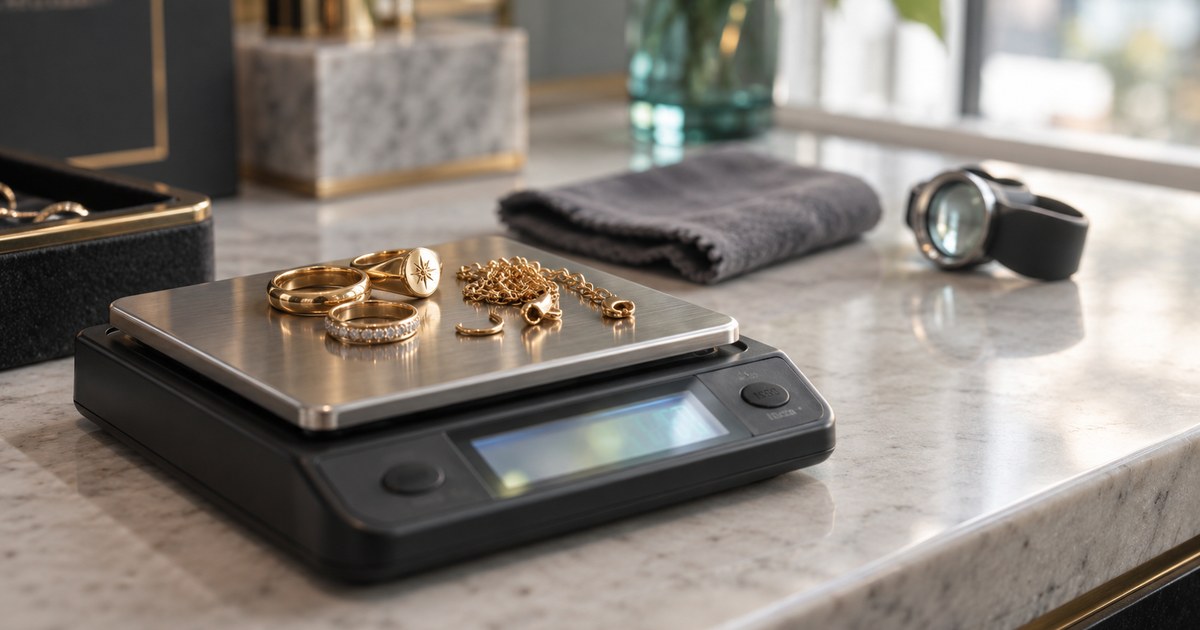
Search for the best place to sell gold jewelry and every result names a winner, usually the one the site is affiliated with. The useful answer is less satisfying and much more reliable: the right buyer depends on whether the value of your piece sits in the metal or in the object, and those two kinds of gold sell in completely different places.
Scrap gold, meaning broken chains, single earrings, and plain worn bands, sells best wherever you can get several melt-based offers quickly, which usually means comparing a pawn shop, a local jeweler, and a reputable mail-in buyer. Wearable, signed, or period pieces sell best through a jeweler, consignment, or auction, because those buyers pay for the piece rather than the gram.
Sorting your pile into those two categories is the first step, and it decides everything that follows.
First, sort the pile into metal and objects
Do this before you talk to anyone. It changes who you should approach and it stops you accepting a melt price for something worth more intact.
- Confirm it is solid gold at all. A karat mark followed by letters such as GP, GEP, HGE, or GF is a coating or overlay mark rather than solid gold. Plated pieces have no scrap value worth pursuing. Gold filled is the exception in that family: it carries a measurable fraction of gold by weight, so it does have modest scrap value, though usually only in quantity and only from buyers who handle it. The FTC’s consumer guidance also notes that terms like “gold flashed” and “gold washed” indicate especially thin coatings, and that you should ask a seller to explain them. Why that matters for resale is covered in is gold plated jewelry worth anything, and the physical checks are in how to tell if gold is real.
- Group the solid gold by karat. 10K, 14K, and 18K pieces need to be weighed separately because they are paid at different rates, and mixing them lets a careless buyer average them down. Read fineness numbers carefully when sorting: the Assay Office lists 375 as 9ct, 585 as 14ct, 750 as 18ct, and 916 as 22ct, so a 375 piece is 9 karat and worth noticeably less per gram than a 10K one, not more.
- Pull out anything with a name, a design, or an era. A signed piece, a distinctive antique setting, or a well-made period ring is an object with its own market. Once it goes to a refiner, that value is gone permanently.
- Pull out anything with real stones. Melt buyers price the metal and generally either ignore stones or return them. Selling a diamond ring for its gold weight is one of the most expensive mistakes in this whole process.
Look for the maker’s trademark next to the karat mark as well. The FTC advises consumers to look near the karat quality mark for the name or registered trademark of the company standing behind it, and its presence is a small quality signal that also helps identify a collectible maker.
Name the number you are being offered
Three different values get called “what it is worth,” and mixing them up is how people end up disappointed by a perfectly fair offer:
- Melt value is karat purity times weight times the current market price of gold. It is the floor under any solid gold piece, and it is what a refiner-facing buyer is working from.
- Resale value is what a piece sells for as jewelry to the next wearer. It exists only when the piece is wearable and wanted, and it is the only number that can beat melt.
- Retail replacement value is what it would cost to buy an equivalent new piece, which is an insurance figure. No buyer will ever pay it, and quoting it at a counter will just mark you as unprepared.
Which of those three you should be chasing, and how they relate, is the subject of the jewelry value guide.
Every melt-based offer is assembled the same way: purity, times weight, times spot, minus the buyer’s margin for refining, assay, handling, and the risk of holding metal whose price moves daily. That last term is why no honest article can hand you a single percentage to expect. It moves with the buyer’s costs, the competition on your street, how much you are selling, and what gold did this week.
What you can do instead is better than a memorized percentage: compute your own melt figure first, using the arithmetic in how much is 14k gold worth per gram, then judge every offer as a share of that number. Three offers expressed as percentages of one figure you calculated yourself is a real comparison. A percentage someone quoted you in the abstract is not.
One thing no melt buyer pays for is craftsmanship. A beautifully made 14K bracelet and a mangled 14K chain of the same weight are worth exactly the same to a refiner. That is the entire argument for pulling the objects out of the pile first.
Which channel fits which piece
Before the detail, the short version:
- Plain scrap, broken chains, single earrings, worn bands. Any melt buyer, chosen on price and convenience. Get three quotes.
- Wearable, undamaged, currently fashionable pieces. A jeweler who sells estate jewelry, because they can pay a resale price rather than a melt price.
- Signed, antique, or unusual pieces. A specialist dealer, auction house, or consignment, which reach the buyers who pay for rarity.
- Anything with substantial stones. Nowhere at all, until the stones have been assessed on their own terms.
Pawn shops: speed, and the loan option
Pawn shops are the fastest way to convert gold to cash, generally same day and without shipping anything anywhere. They are also the only channel that offers an alternative to selling: a loan against the piece, so you can get money now and keep the option of getting the jewelry back.
They price from melt, and their offers reflect the fact that they are carrying risk and holding inventory. What the offer is actually made of, and the questions to ask at the counter, are broken down in how much do pawn shops pay for gold.
Local jewelers: the only channel that pays for the piece
A jeweler who sells estate jewelry can pay above melt for something they can put in the case and resell, because their exit is a retail customer rather than a refiner. That is the single most important structural difference between channels.
To make it work for you:
- Ask directly whether they are buying for resale or for scrap. Those are two different offers from the same shop, and many jewelers do both.
- Bring the piece clean and wearable. A missing stone or a broken clasp pushes a resale candidate into the scrap pile.
- Ask about trade credit. Credit toward a purchase is often higher than the cash offer, which is genuinely useful if you were going to buy something anyway.
- Ask what they would do with the stones. Some jewelers buy the mounting for metal and the stones separately, which can beat a single blended offer.
A jeweler is also the right first stop for a signed or antique piece, because they will tell you whether it belongs with a specialist. When it does, an auction house or a consignment arrangement reaches buyers who pay for rarity rather than weight, at the cost of waiting weeks or months and paying a commission out of the sale price. For an ordinary gold chain that is a waste of everyone’s effort. For a piece a specialist gets excited about, it is often the only route to the real buyer.
Mail-in and online gold buyers: competitive, with process risk
Buyers who work by post often price closer to the metal market because their overheads are lower, and the good ones are transparent about their rate. The risk is not usually price, it is process. Manage it deliberately:
- Get the offer in writing before anything ships, and confirm what happens if you decline: who pays return shipping, how long they hold the goods, and in what condition they come back.
- Photograph and weigh every piece at home, with the marks visible, so there is a record of exactly what went in the envelope.
- Insure the shipment for what you believe the contents are worth, not for the postage cost.
- Confirm they will not melt or alter anything before you accept. Once a piece is refined it cannot come back.
- Read the return policy and reviews first. The FTC’s guidance on jewelry transactions makes the same basic point: get policies in writing and check who you are dealing with before you commit.
That fourth point is not hypothetical. In testimony on precious-metal consumer issues, the FTC described complaints about cash for gold offers where marketers failed to give consumers a quote for their jewelry before melting it down. A written quote before anything is altered is the protection that whole category of complaint is about.
Before you sell anything, do these five things
- Weigh the lot yourself, grouped by karat, on a scale that reads to a tenth of a gram.
- Compute the melt ceiling so you can recognize a lowball offer instantly.
- Photograph everything, marks included, before it leaves your hands.
- Get at least three offers, ideally one from each channel type. This is the single highest-return step in the process and costs only time.
- Do not let anyone test destructively without asking. Acid testing on a touchstone is standard practice and the International Gem Society describes it as the conventional method, but you should be told before a piece is filed or scratched, and told where.
Ask each buyer to explain their offer in terms of karat, weight, and rate. A buyer who will not break the number down is telling you something.
If you are unsure which pieces belong in the melt pile and which deserve a jeweler’s second look, scan them with GemPeek first. It gives a first read on the likely type, visible stamps and materials, style, condition, and an estimated value range, which is exactly the sorting information this decision depends on. Treat that read as a starting point to confirm at the counter, not as a valuation to quote back at a buyer.
Sources
- FTC Consumer Advice: Buying Platinum, Gold, and Silver Jewelry
- FTC Jewelry Guides
- 16 CFR 23.3: Misrepresentation as to gold content
- International Gem Society: Testing Gold Karatage and Interpreting Marks
- The Assay Office: gold fineness standards and hallmarking
- FTC testimony on consumer protection issues in precious metals