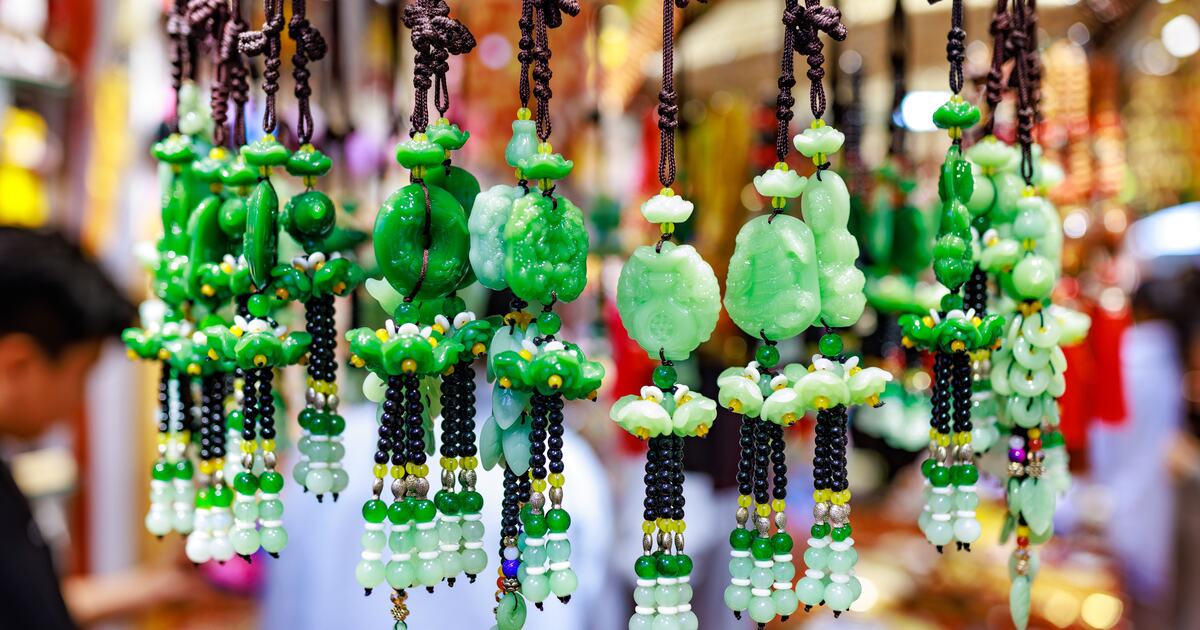
A green bangle or a carved pendant turns up in a family box, and the first question is always the same: is it real jade or dyed glass? Learning how to tell if jade is real takes a few minutes of careful looking, but there is a catch most home guides skip. “Real jade” hides a second question, whether the stone has been treated, and that one usually needs a lab. Here is the honest version of both.
To tell if jade is real, check that the piece feels cold to the touch and warms slowly, feels dense and heavier than it looks, and shows no molded seams or trapped bubbles, which point to glass. Genuine jade is one of two minerals, jadeite or nephrite. Even when the mineral is real, though, it may be bleached, polymer-filled, or dyed, so home checks confirm the material, not the treatment.
Below, how to separate jade from the common fakes, the difference between jadeite and nephrite, and the A, B, and C grading that decides what a piece is actually worth.
First, jade is two different minerals
The word jade covers two distinct minerals, and knowing which one you have matters.
Jadeite is the rarer and generally more prized of the two. It is the material behind the intense “imperial” green that collectors chase, and it comes in white, lavender, orange, and near-black as well. Jadeite rates roughly 6.5 to 7 on the Mohs hardness scale.
Nephrite is the more common historical jade, the material of most antique Chinese carvings and Maori pieces. It tends toward creamy whites and softer spinach greens, with a smooth, slightly waxy or oily luster. Nephrite is a touch softer, around 6 to 6.5 on the Mohs scale, but it is exceptionally tough because of its densely interlocked fibrous structure.
Both are genuine jade. The distinction affects value, since fine jadeite generally commands far more than nephrite, but at home you are mostly telling either real jade from an imitation. A jeweler or lab can confirm which mineral it is.
How to tell if jade is real at home
None of these proves jade on its own, but together they catch most fakes.
The cold-touch test. Jade is a good conductor of heat, so it feels distinctly cool against the skin or the back of your hand and warms slowly. Glass warms faster, and plastic feels warm almost immediately. Hold the piece for a few seconds: real jade stays cool longer than you expect. This is a hint, not a verdict, since a cold room skews it.
Heft and density. Jade is dense, so a genuine piece feels heavier in the hand than its size suggests. A bangle that feels suspiciously light for its bulk is often glass, resin, or a lighter mineral posing as jade.
Look for molding clues. Under a loupe or bright light, hunt for tiny round air bubbles trapped inside, a mold seam, or a too-perfect glassy uniformity. Bubbles and seams mean glass or resin, never natural jade. Real jade often shows a subtly granular or fibrous internal texture rather than perfect clarity.
Sound and surface. Genuine jadeite pieces tapped gently together can give a clear, resonant note rather than a dull plastic click, and jade takes a smooth, cool polish without the slightly greasy feel of some plastics. Treat sound as a weak supporting clue only.
Suspicious color. Color that pools in cracks, sits in a fine network of surface lines, or looks flatly uniform and unnaturally vivid is a warning sign of dye. Natural jade color usually varies subtly through the stone.
Type A, B, and C: the grading home guides skip
Here is the part that decides value, and the part a cold-touch test can never answer. Jadeite is graded by treatment, not just by whether the mineral is real.
- Type A is natural jadeite that has only been worked and given a traditional wax surface polish, with no chemical treatment to its color or structure. This is the material collectors want, and the only kind that holds strong long-term value.
- Type B is jadeite that has been bleached with acid to remove brown or gray impurities, then impregnated with clear polymer or resin to fill the gaps and restore transparency. The mineral is real jadeite, but it has been chemically altered and can degrade over time. It is worth far less than Type A.
- Type C is jadeite that has been artificially dyed to add or deepen color. The dye can fade, and the piece is worth a fraction of natural material.
Pieces can be both bleached and dyed (sometimes called Type B+C). The trouble for a home inspector is that a skillful Type B or C piece can pass every kitchen-table test, because the underlying mineral genuinely is jade. Dye pooling in cracks and an overly uniform, glassy look can hint at treatment, but they are not reliable. Confirming treatment takes laboratory equipment, typically infrared spectroscopy (FTIR), which detects the polymer filler and other signs of alteration that the eye cannot. That is why serious jadeite is sold with a lab certificate, and why “it looks like real jade” is not the same as “it is untreated Type A jade.”
The common fakes to recognize
The imitations you are most likely to meet:
- Dyed quartz or dyed chalcedony, colored to mimic jadeite green, often too uniform and sometimes betrayed by dye in fractures.
- Glass, which can be convincing but often traps bubbles, warms quickly, and may show a mold seam.
- Serpentine, a genuinely natural green stone sold under names like “new jade,” “Korean jade,” or “Suzhou jade.” It is softer than jade and, despite the name, is not jade at all.
- Aventurine and other green stones passed off as jade in tourist markets.
Names are the trap here. Many trade names that include the word “jade” describe stones that are not jadeite or nephrite. When a label leans on a qualifier, treat it as a flag to verify.
What to do with a maybe-jade piece
Work the checks in order: cold touch, heft, a loupe pass for bubbles and dye, and a look at how the color sits in the stone. Photograph the piece clearly, including any carving detail and color transitions. Because value swings so widely between fine Type A jadeite, treated jade, and outright fakes, this is a category where a professional opinion pays for itself, so it helps to know how much a jewelry appraisal costs before you commit. For pendants and beaded pieces, our necklace identification guide shows where to look and what the stringing and clasp can add to the story. And because the same “real but is it the good version” logic applies to gemstones generally, our guide on how to tell if a diamond is real is a useful companion, while what makes jewelry worth more explains why treatment and material quality move the price so far.
If you want a fast first read, scan the piece with GemPeek. The app returns a likely material and type identification, style and condition notes, and an estimated value range, so you know whether you are probably holding real jade before you spend on a lab test. Treat that as an informed first answer, and confirm untreated Type A status with a gemological lab whenever the value matters.